
Every article on this topic gives you the same seven or eight tactics in a slightly different order. Read before bed. Carry a book everywhere. Join a book club. Set a yearly goal. None of them tell you which of these actually survives contact with a genuinely busy month, because most of the people writing them never tracked it.
I did track it. Over the last two years I've run seven of the most commonly recommended reading-habit tactics on myself, back to back, roughly sixty days each, logging whether I actually did the thing on a normal week versus a slow one. Three of them collapsed almost immediately once work got heavy. Four of them held, and one of those four turned out to matter more than the rest combined. This is the ranking, with the actual failure points, not the polished version.
I'm a software engineer, ten years in, and I ended up running this experiment because it's basically the same question I ask about every learning habit I build into Edirae, the retention platform I founded. What survives a bad week is the only thing that matters. A tactic that only works when you're motivated isn't a tactic, it's a mood.
How I actually tested this
Each tactic got roughly sixty days, tracked in a simple daily log: did I read that day, yes or no, and roughly how long the session ran. I didn't cherry-pick easy months. The test period for "carry a book everywhere" happened to land during a stretch with two work trips and a product launch, which turned out to be useful, because that's exactly the kind of week that reveals whether a habit is real or just convenient.
I ranked each tactic on three things: how often it survived a genuinely busy week, how much friction it added to an already full day, and whether it produced anything I could still remember a month later, since a reading habit that produces no retained information isn't really solving the problem people actually have. That last criterion ended up mattering more than I expected going in.
1. The daily minimum floor (ranked best, survived every busy week tested)
This is the tactic that held through everything, including the launch week and both trips. The rule: two pages minimum, every day, no exceptions, before touching my phone in the morning. Not a chapter. Not "whenever I have time." A floor low enough that even a genuinely terrible day still allows ninety seconds to clear it.
Most days I read well past two pages once I'd started, which was the actual point. The floor isn't a target, it's a permission slip to start on days you'd otherwise skip entirely. On the two weeks I logged as objectively worst for time, I still hit the two-page floor on eleven of fourteen days, which no other tactic on this list came close to matching.
Why it works isn't mysterious. It removes the decision entirely. There's no negotiating with yourself about whether today counts as busy enough to skip, because the bar is set below every plausible excuse. Verdict: best for anyone whose previous attempts died during a busy stretch, which based on the requests I get, is almost everyone.
2. A forced recall summary after each session (ranked second, and the one that mattered most for retention)
This wasn't originally a consistency tactic, it was meant to fix retention, but it turned out to matter for stickiness too. At the end of every reading session, before closing the book, I write two or three sentences from memory summarizing what I just read. No peeking at the page.
Henry Roediger and Jeffrey Karpicke's research on the testing effect found that students who tested themselves on material, actively trying to recall it, retained meaningfully more of it a week later than students who spent equal time rereading. Rereading felt more productive to the students in their studies. It wasn't. I found the same thing here. Sessions that ended with a forced recall summary were the ones I could actually discuss a month later. Sessions that ended when I just closed the book evaporated within days, which lines up with Hermann Ebbinghaus's forgetting curve research from the 1880s: information that isn't actively retrieved fades fast, and it fades on a schedule you can actually predict.
This ranked second rather than first because on its own it doesn't create consistency, it just makes the reading you do actually count. Paired with the daily floor above, it's the two-tactic combination that did almost all the work. Verdict: best paired with tactic one, not a replacement for it.
3. Environment design: book visible before the phone is reachable (ranked third)
I moved my book to sit directly on top of my phone charger, so I couldn't reach the phone in the morning without physically moving the book first. This sounds almost too simple to matter, and I was skeptical going in. It held up better than I expected, failing only during the work trips when I wasn't sleeping in my own space and the environment reset itself without me.
This is the kind of tactic that gets dismissed as too obvious to write about, but the failure data backs it up. Every week it failed was a week I was somewhere other than my normal environment. Every week I was home, it held. That's a stronger consistency signal than most of what gets recommended with more enthusiasm. Verdict: extremely effective at home, fragile the moment your environment changes, which is worth knowing before you build your whole plan around it.
4. Cutting the yearly goal to something almost embarrassingly small (ranked fourth)
For three years before this test I'd set a goal of 24 books a year and finished maybe seven. During the test period I dropped the stated goal to five books for the year and let myself be surprised if I beat it. I did, by a wide margin, but the goal itself wasn't what drove that. It removed the guilt spiral that used to follow a missed week, which in past years had been the actual trigger for abandoning the habit entirely around March.
This ranks fourth rather than higher because it's a background condition, not something you do daily. It didn't independently produce reading sessions the way the floor or the recall summary did. What it did was remove the psychological exit ramp that the other tactics needed to not get sabotaged by. Verdict: necessary support, not a standalone fix.
5. Reading before bed as the fixed slot (ranked fifth, degraded under real fatigue)
This is probably the single most repeated piece of reading-habit advice, and it's the first one that actually broke under pressure in my test. On a normal week it worked fine. On the two weeks I was genuinely exhausted, which is exactly when a habit needs to hold, I fell asleep within a few pages more often than I completed a session, and the day got logged as a miss.
The problem isn't the advice itself, it's that bedtime is the point in the day when willpower and alertness are both at their lowest, which makes it a bad anchor for anything that requires active engagement rather than passive consumption. It's not a bad slot for winding down. It's a mediocre slot for building a habit that needs to survive your worst days. Verdict: fine as a bonus session, unreliable as your only anchor.
6. Carrying a physical book everywhere as a friction hedge (ranked sixth)
The idea here is that having a book on hand for any dead five minutes, a queue, a waiting room, a delayed meeting, adds up over a week. In practice, across sixty days, I used it maybe twice. The book added actual physical friction (one more thing to remember, one more thing taking up bag space) that outweighed the rare moments it got used.
This one exposed something about most reading-habit advice: it assumes the bottleneck is opportunity, when for most people with an actual daily obligation, the bottleneck is decision fatigue and environment, not the absence of five spare minutes somewhere in the day. Verdict: low cost if you already carry a bag, but don't expect it to move the needle much on its own.
7. Joining a book club for social accountability (ranked last, added stress without adding consistency)
I joined a monthly book club specifically for this test, expecting social pressure to be a strong lever. It wasn't, at least not for daily consistency. What it produced instead was a predictable spike of reading in the three days before each meeting and near-zero reading in between, which is a real pattern, just not the one the advice implies. Anders Ericsson's research on deliberate practice is clear that improvement requires consistent, targeted repetition, not a monthly cram, and that gap showed up clearly here. The club was genuinely enjoyable as a social activity. It did essentially nothing for the underlying daily habit, and in one month it added mild anxiety about not having "enough" to say when I hadn't kept pace.
Verdict: worth doing for the social value on its own terms, but don't count on it to build the daily habit. It's solving a different problem than the one most people think they're solving when they join one.
What Robert Bjork's research explains about why the ranking landed this way
Robert Bjork's work on what he calls desirable difficulties makes a point that runs through this entire ranking: the tactics that felt hardest in the moment, the daily floor with no exceptions, the forced recall with no peeking, were the ones that produced the strongest results. The tactics that felt easiest, carrying a book just in case, showing up to a monthly meeting, produced the weakest.
This is uncomfortable because it means the intuitive version of "make it easy and it'll stick" is only half right. Making the daily requirement small helps. Making the actual engagement effortless doesn't. The two-page floor is small, but the recall summary at the end of a session is genuinely a little uncomfortable, and that discomfort is exactly why it's doing real work rather than just feeling productive.
Why Sweller's cognitive load research explains the note-heavy failures I didn't include above
I ran a version of this test years earlier with a note-taking system layered on top of reading, expansive chapter summaries, cross-references, a whole tagging structure, and it collapsed faster than any tactic on this list, which is why it's not ranked above. John Sweller's cognitive load theory explains why: working memory can only hold and process a small number of new items before performance degrades sharply, and deciding what to write, how to format it, and where to file it while also trying to follow an argument is a lot to ask of a fifteen-minute morning session. The two or three sentence recall summary works partly because it's light enough to survive a genuinely tired morning. A system that only works when you have spare cognitive capacity isn't a daily habit, it's a weekend project.
The stack that actually held for two years
If I had to compress the entire ranking into what to actually do, it's tactics one and two, run together, every day, with tactic three as the environment support underneath them and tactic four as the psychological guardrail that keeps a missed day from turning into a missed month. Everything ranked fifth through seventh is fine as a bonus, none of it as a foundation.
What I'd tell someone starting today
Start with the floor, not the goal. Two pages a day beats a 24-book yearly target that quietly gets abandoned by March, because the floor is something you can actually hit on your worst day, and the target only resolves once a year, long after you've stopped checking it.
Add the recall step before you add anything else. It's the cheapest, highest-leverage tactic on this entire list, and it's the one most "how to read more" guides skip entirely because it's about retention, not volume.
Don't build your plan around a fixed slot you can't guarantee. Bedtime reading is a fine bonus and a weak foundation, because it sits at exactly the point in your day when discipline is lowest.
Treat the social and just-in-case tactics as optional extras, not core infrastructure. They're pleasant. They're not what makes the habit survive a bad month.
The retention system underneath this
None of the research behind this ranking is new. Ebbinghaus, Bjork, Roediger and Karpicke, Sweller, Ericsson, all of it has been sitting in the literature for decades. The reason most people still can't tell you what they read a month ago isn't a lack of access to the research, it's that building a real recall habit by hand, on top of an already full week, is its own quiet second job.
I built Edirae to remove exactly that second job. I log my two-sentence recall summaries there after each reading session, and it turns them into spaced review prompts automatically instead of me manually deciding what to revisit and when, which is the exact step I used to skip first whenever a week got busy. Right now I'm running the same system on quantum computing material for the Side Quest Series I'm filming, alongside Mandarin vocabulary that leaks out of my head fast without a schedule behind it. Anki works fine too if you're willing to build and maintain the deck yourself. I use Edirae because it auto-generates the review schedule from what I've already logged. Free trial at edirae.com.
Related Reading
- I Failed to Build a Reading Habit for 3 Years. One Rule Fixed It in 6 Weeks.
- I Downloaded 300 Papers and Read 4 Properly. Here's the System That Fixed That.
- I Took 1,200 Pages of Notes and Reread Almost None of Them. Here's What Changed.
FAQ
How do I build a reading habit that actually sticks? Set a daily minimum small enough that you can hit it on your worst day, something like two pages, and pair it with a short recall step at the end of each session. The floor keeps the habit alive through busy weeks, and the recall step is what makes the reading worth doing in the first place.
What's the single most effective reading habit tactic? Out of seven tested over sixty days each, a daily floor combined with a forced recall summary ranked highest, surviving every busy week in the test while producing information that was still retained a month later.
Does reading before bed actually build a lasting habit? It's a common recommendation, but it ranked poorly in testing because bedtime is when alertness and willpower are both lowest, making it unreliable during genuinely exhausting weeks. It works better as a bonus session than as the sole anchor of the habit.
Does joining a book club help build a daily reading habit? Not for daily consistency. It tends to produce a burst of reading before each meeting and little in between, which is a real pattern but doesn't build the underlying daily habit the way a small daily floor does.
Why do I forget what I read even when I finish books consistently? Finishing a book is exposure, not retention, and those are different processes. Without an active recall step, most of what you read fades within days according to research on the forgetting curve, regardless of how many books you finish.
Should I set a yearly book count goal? A much smaller goal than most challenges suggest tends to work better. Setting a target of five books and beating it builds more consistency than setting 24 and quietly missing it, since the smaller goal removes the guilt spiral that usually ends the habit around the third month.
Does carrying a book with you actually increase how much you read? In testing, this added minor physical friction for very little actual reading time gained. It's a reasonable low-cost extra but not a tactic to build a plan around, since the real bottleneck for most people is decision fatigue and environment, not a lack of spare minutes.
Is taking detailed notes while reading better than not taking notes at all? Not necessarily. A heavy note-taking system layered onto reading collapsed faster than any lighter tactic tested, because deciding what to write and how to format it competes with actually following the argument for the same limited working memory.
Related Articles

The Complete Guide to the Feynman Technique (2026) — Edirae
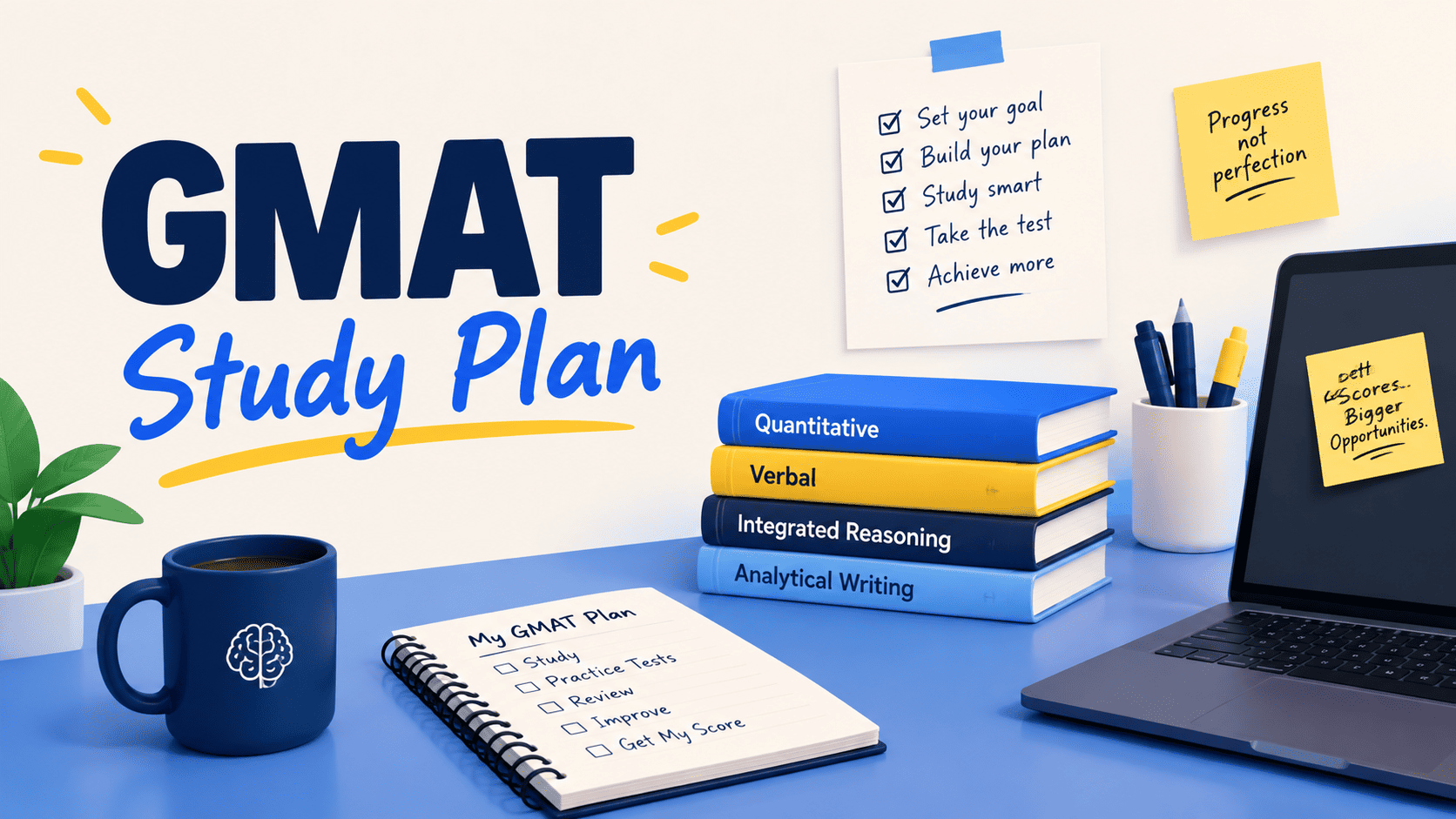
I Watched Four People Try the 60-Day GMAT Plan. Only One Worked. Here's What She Did Differently.
Four people in my extended circle sat the GMAT inside an eighteen month window. All four gave themselves roughly sixty days. All four bought the same official guide and downloaded a similar looking spreadsheet off Reddit.
How to Introduce Yourself in an Interview (The 90-Second Formula That Actually Works)
The first 90 seconds of a job interview decide more than most candidates realize. Research from the University of Toledo showed that interviewers form a "hire or don't hire" judgment within the first 3-5 minutes of an interview. Everything after that is confirmation bias. Your qualifications, your project stories, your questions at the end, they all get filtered through the impression you made at the start.