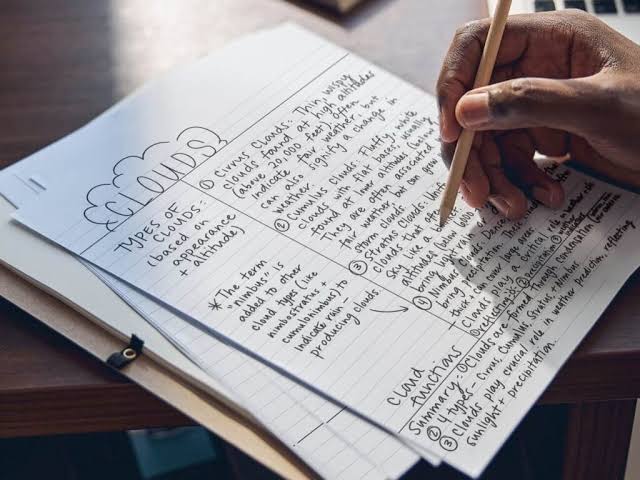
I Took 1,200 Pages of Notes and Reread Almost None of Them. Here's What Changed.
I exported my notes app last year to see how bad it was. Four years of notes, roughly 1,200 pages of exported text, from books, conference talks, internal architecture docs, courses I paid for. Then I checked the open history. I had reopened about forty of those notes. Ever. Once each, mostly by accident while searching for something else.
That's not a note-taking system. That's a landfill with good search.
The thing that annoyed me most wasn't the wasted hours. It was that I had genuinely believed I was learning during all that typing. The typing felt like work. It looked like work. And it produced almost nothing I could use six months later, because the notes were written by a person who already understood the material for a person who would not.
So I rebuilt the whole thing. Not the app, the app was never the problem. I rebuilt the ten seconds before each note gets written. Here's what I do now, why it works, and what I stopped doing entirely.
Notes Are Not a Recording Problem
Almost every note-taking guide treats this as a capture problem. Better app, better tags, better folder structure, better keyboard shortcuts. Zettelkasten this, PARA that. I tried most of them. My capture was never broken. I captured plenty. I captured too much.
The actual failure is that notes taken as a recording of what someone said are useless to the future version of you, because they carry the speaker's structure, not your confusion. When you read your own note from eight months ago and think "why did I write that down," that's the tell. The note preserved information you already understood in the moment. It did not preserve the thing you were unsure about, the thing you almost disagreed with, or the question the material raised and never answered.
Those are the parts you'd actually reopen a note for.
I'm a software engineer. I've been writing code professionally for about ten years, most of that in Lagos. The closest analogy I can give is logging. Junior engineers log everything, every function entry, every variable, and then when production breaks at 2am the log is so loud it's useless. Senior engineers log the decision points and the anomalies. Notes work the same way. Volume is not fidelity. Volume is noise with a timestamp.
What the Research Actually Says
I want to be careful here because note-taking research is messier than the productivity internet pretends.
The finding people quote most is Mueller and Oppenheimer's 2014 study, the one where longhand note-takers outperformed laptop note-takers on conceptual questions. The popular version is "handwriting is better for your brain." The actual mechanism the authors proposed is more interesting: laptop users transcribed verbatim because they could type fast enough to keep up, and verbatim transcription requires no processing. The handwriting group was forced to select, compress, and rephrase, because hands are slow. The pen wasn't magic. The bottleneck was.
Worth noting that a large 2021 replication by Morehead, Dunlosky and Rawson failed to reproduce the clean advantage, which tells me the medium matters less than whether you're processing. You can process badly with a pen and well with a keyboard. The constraint just has to come from somewhere.
Underneath that sits Craik and Lockhart's levels of processing framework from 1972: material encoded with attention to meaning is retained better than material encoded by surface features. Copying words is a surface operation. Restating an idea in your own words is a meaning operation. Those two activities look identical from across the room and are not remotely the same thing.
Then there's the generation effect, documented by Slamecka and Graf in 1978 and extended by Bjork and others: information you produce yourself is remembered better than information you read. And the testing effect, from Roediger and Karpicke's 2006 work, which showed that retrieval practice beat repeated study by a wide margin at one week, even though the re-readers felt more confident. That confidence gap is the whole tragedy of note-taking. Rereading notes feels like learning. It is mostly recognition, not recall.
Finally, Ebbinghaus, 1885, still undefeated. You lose the majority of new material within days unless something interrupts the decay. A note sitting in a folder does not interrupt anything.
Put those together and you get the uncomfortable conclusion: the value of a note is created at the moment of writing, through processing, and then it decays unless the note is retrieved. Storage contributes almost nothing on its own.
Rule 1: If You Didn't Change the Words, It Isn't a Note
This is the single change that did the most for me.
If I'm about to write something down and the sentence I'm writing is roughly the sentence I just read or heard, I don't write it. I either rephrase it in language I'd use out loud, or I skip it.
That sounds trivial. In practice it cuts my note volume by something like seventy percent and roughly triples what I retain, based on my own retrieval testing over the past year. It's not a controlled study, it's one person tracking his own recall, so weigh it accordingly. But the direction is not subtle.
The rephrasing does two jobs. It forces the meaning-level encoding from the levels-of-processing work. And it exposes the fraud. When you try to restate an idea and can't, you've just discovered you didn't understand it. That discovery is worth more than the note would have been. Write the confusion down instead.
Practical version: after a paragraph, look away from the source and type what it said. If you can't, reread it once and try again. If you still can't, write "I don't understand X because Y" and move on.
Rule 2: Write for the Person Who Forgot
Every note I keep has to make sense to someone who does not remember the context. That person is me, in five months, at 11pm, trying to solve something.
Which means:
No bare fragments. "Kafka consumer groups, rebalancing" is not a note. "Kafka rebalances partitions when a consumer joins or dies, which pauses consumption, which is why our lag spikes look like deploys" is a note.
No pronouns pointing at the source. "This is the key insight" means nothing later. What insight.
Always include why you wrote it. One clause is enough. "...which is why our lag spikes look like deploys" is the why. It tells future-me what problem this note attaches to.
I steal a habit from code review here. A good commit message explains why the change exists, not what changed, because the diff already shows what changed. A good note explains why the idea matters to you, not what the source said, because the source still exists and you can go back to it.
Rule 3: A Note Without a Question Is Dead Weight
Every note session ends with me writing at least two questions the material raised and did not answer.
Not comprehension questions. Not "what is a consumer group." Real open questions. "If rebalancing is this expensive, why is the default session timeout so short." "Does this still hold when the dataset doesn't fit in memory." "The author assumes the reader has a stable team. What breaks if you don't."
Questions do something notes can't: they give you a reason to return. A statement is closed. A question is an open loop, and open loops pull. Half my best follow-up reading over the last year came from a question I wrote at the bottom of a note six weeks earlier.
They also make excellent retrieval prompts later, which matters for the next rule.
Rule 4: Capture Fast, Process Slow, and Never in the Same Session
I used to try to write good notes live, during a talk or while reading. It doesn't work. You can't listen well and compress well at the same time, which is basically Sweller's cognitive load argument: working memory is small, and if you spend it on formatting and phrasing you have nothing left for comprehension.
So I split it.
Capture pass. Fast, ugly, during the input. Short fragments, timestamps, page numbers, arrows, question marks next to anything confusing. Nobody reads this but me and I read it once. I allow verbatim here, because the goal is a pointer, not a note.
Processing pass. Same day if possible, within 48 hours at worst. Twenty minutes. I open the capture, close the source, and write the actual note from memory, using the capture only as a prompt. Then I check the source for what I got wrong.
That last step matters more than it looks. Writing from memory before checking is retrieval practice, which is the Roediger and Karpicke finding applied to your own notes. You get the encoding benefit and the note at the same time. Writing the note while looking at the source gets you neither.
The processing pass is also where most notes die, and that's correct. I usually keep around a quarter of what I captured. The rest was context I needed in the moment and don't need now.
Rule 5: A Note You Never Retrieve Is a Note You Never Took
This is the part almost every note-taking system skips, and it's the part that decides whether any of this compounds.
You've now got a small set of well-processed notes. Ebbinghaus says they'll be gone in a month if nothing touches them. Your notes app will not touch them. Search only works when you already remember enough to search for it, which is exactly the situation where you don't need the note.
So the processed notes need to become retrieval prompts. For me that's a handful of question-and-answer pairs per session, pulled straight from the note, scheduled on spaced repetition. Not everything. Three to five items per hour of input, the ones I'd be embarrassed to forget.
The questions from Rule 3 usually convert directly. So do the "I don't understand X" lines, which turn into prompts once I've resolved them.
I'm testing this right now on the Side Quest Series, my ongoing thing where I learn something outside my field in public. Currently Mandarin and the basics of quantum computing, which are an absurd pair but that's part of the point. Mandarin is almost pure retrieval, so the notes are thin and the card count is high. Quantum computing is the opposite. My notes there are long and argumentative, full of "wait, why," and the cards are few but conceptual. Same system, wildly different ratios, and that difference is itself a signal about what kind of material you're dealing with.
What My Week Actually Looks Like
To make this concrete, here's the real shape of it. I don't want to imply more discipline than I have.
Monday through Friday, whatever I read or watch gets a capture file. Ugly, fast, maybe five minutes of writing across an hour of input. I do not try to make these good.
Most evenings, twenty to thirty minutes of processing on whatever I captured that day. Source closed. Write from memory. Check. Delete most of it. Add two questions.
At the end of processing, I pull three to five retrieval prompts from the note. This takes about three minutes now. It used to take fifteen, before I stopped trying to make perfect cards.
Ten minutes of review in the morning, usually before anyone else in the house is up. That's the whole retention layer.
Sunday, about twenty minutes, I reread the questions from the week. Not the notes, just the questions. That's where the next week's reading list comes from.
Total is maybe three and a half hours a week, and most of it replaced time I was already spending taking notes badly.
What I Stopped Doing
Highlighting. I used to highlight while reading and convert highlights into notes later. Highlighting is selection without processing, and the conversion step almost never happened. Dunlosky's 2013 review of study techniques rated highlighting as low utility, and my own export confirmed it. My Kindle highlights are a beautiful, well-organized record of things I do not remember.
Elaborate folder structures. I spent a real weekend once designing a taxonomy. I used it for about three weeks. The structure that survived is four folders and a date prefix. Organization is a procrastination costume.
Taking notes on things I don't have a use for. This one stung. A lot of my notes existed because taking notes felt responsible, not because I had any plan for the material. If I can't say what problem a piece of input attaches to, I now just read it and let it go. Reading for pleasure is allowed. It doesn't need a file.
Rereading notes as a study method. It's recognition, not recall, and it produces the confidence without the competence. If I want to know whether I still have something, I close the note and say it out loud.
Where This Breaks
I'd rather tell you the failure modes than pretend it's clean.
It breaks under deadline. When I'm shipping, the processing pass is the first thing that goes, and captures pile up unprocessed for a week. A capture older than about five days is usually unrecoverable, because the pointers point at memories that are gone. I now just delete backlogs older than a week instead of pretending I'll get to them.
It breaks for reference material. Some notes are lookups, an API signature, a config value, a phone number. Those don't need processing or retrieval, they need search. Don't run this system on them.
It breaks if you make the cards too elaborate. I spent a month writing beautiful multi-part prompts and then dreaded reviewing them. Short, dumb, single-fact prompts get reviewed. Elegant ones get skipped.
And it takes about three weeks to feel worth it, because the payoff is retrieval months later and the cost is tonight. That's the actual reason most people don't do this. Not ignorance. Just a bad deal in the short term that becomes a very good one in the long term.
The Retention Layer
The processing rules above are most of the value, and you can do all of it in a plain text file. The part that's tedious is turning processed notes into retrieval prompts night after night, which is the step that quietly dies first.
I use Edirae for that because it generates cards from the source material, so I'm editing prompts rather than writing them from scratch, which is the difference between a three-minute step and a fifteen-minute one. Anki works fine too if you don't mind building the deck by hand. There's a 3-day free Pro trial at edirae.com if you want to try the retention layer on your own notes. Either tool is fine. Having one is not optional, because without it you're back to a landfill with good search.
FAQ
How many notes should I take per hour of reading? Fewer than you think. After processing, I usually keep between five and fifteen real notes per hour of dense input, and often fewer. If you're keeping more than that, you're probably transcribing rather than processing.
Is handwriting really better than typing for notes? The evidence is weaker than the popular version suggests. Mueller and Oppenheimer found an advantage in 2014, but a large 2021 replication by Morehead and colleagues did not reproduce it cleanly. The mechanism that matters is whether you're forced to rephrase. Handwriting imposes that by being slow. If you can impose it deliberately while typing, typing is fine.
Should I use Notion, Obsidian, Roam, or something else? It genuinely doesn't matter, and the time spent choosing is time not spent processing. Pick one with fast search and get on with it. I've used the same boring setup for two years and the app has never been the limiting factor.
What about AI summarizing my notes for me? It saves time and costs you the encoding. The compression is the learning. If a model compresses the material for you, you get a tidy artifact and none of the retention. I use AI to check my summary after I've written it, and to argue with me about what I got wrong. That's a different job.
How do I take notes in meetings where I can't process later? Different problem, different tool. Meeting notes are mostly decisions and action items, which are reference, not learning. Capture decisions, owners, and dates. Skip the processing pass entirely.
What if I take notes and still forget everything? Then the notes are working and the retrieval is missing. Notes handle encoding. Spaced retrieval handles decay. Most people do the first half and are surprised when the second half doesn't happen on its own.
How long does the processing pass really take? Twenty minutes for an hour of input, once you're used to it. It was forty minutes for the first two weeks because I kept trying to save material I should have deleted.
Can I apply this to video courses and podcasts? Yes, and it's more necessary there, because audio and video move at a fixed pace that discourages processing. Capture timestamps and confusion markers during, process after. Podcasts specifically need it, since the format is designed to feel informative while passing straight through.
Related Articles

You Only Think You Understand It. Here's the 25-Minute Loop That Proves It, and Fixes It.
Most people treat the Feynman Technique as a study method. It isn't one, and that misunderstanding is why it so often produces a satisfying afternoon and nothing three weeks later.

I Watched Four People Try the 60-Day GMAT Plan. Only One Worked. Here's What She Did Differently.
Four people in my extended circle sat the GMAT inside an eighteen month window. All four gave themselves roughly sixty days. All four bought the same official guide and downloaded a similar looking spreadsheet off Reddit.