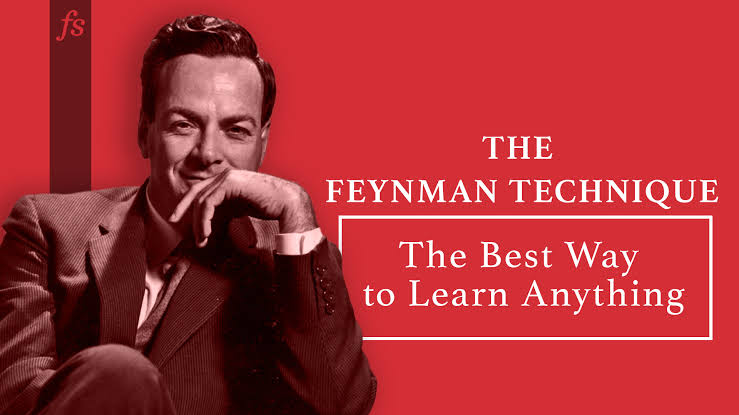
You Only Think You Understand It. Here's the 25-Minute Loop That Proves It, and Fixes It.
Most people treat the Feynman Technique as a study method. It isn't one, and that misunderstanding is why it so often produces a satisfying afternoon and nothing three weeks later.
It's a diagnostic. It doesn't teach the topic. It locates, with unusual precision, the exact point where understanding stops and vocabulary takes over. What a learner does in the twenty minutes after that point is where the actual learning happens, and that part is missing from most descriptions of the method.
This is a practical guide to running it on a topic that's genuinely new. Not exam revision, not a refresher. Something outside the learner's field, being built from nothing.
The four steps, and the one that gets quietly dropped
The standard formulation:
- Write the concept at the top of a blank page.
- Explain it in plain language, as if to someone outside the field.
- Find where the explanation breaks, return to the source, and close that specific gap.
- Simplify, add an analogy, and repeat.
Steps one, two and four are pleasant. Step three is not, and step three is the method. Everything else is packaging around it.
A note on provenance, because the mythology gets in the way of using the tool well. Richard Feynman never published this as a named four step method. The packaging came decades later from other writers. What is documented, in James Gleick's biography, is that as a graduate student Feynman kept a notebook titled "Notebook Of Things I Don't Know About," then rebuilt physics inside it in his own terms.
That detail is more instructive than the four steps. The notebook wasn't an inventory of what he knew. It was a deliberately maintained inventory of what he didn't. The output of this technique is not a clean explanation. The output is a list of holes, and the list is the asset.
Why it works: understanding is systematically overrated
In 2002, Leonid Rozenblit and Frank Keil published a study in Cognitive Science with a deceptively simple design.
Participants rated how well they understood ordinary objects. A zipper. A flush toilet. A cylinder lock. Ratings came back reasonably high. Participants were then asked to write a detailed, step by step mechanistic explanation of how the object works. Then they re-rated their own understanding.
The ratings dropped, substantially. Rozenblit and Keil named the effect the illusion of explanatory depth. People routinely mistake familiarity with a thing, plus the ability to recognise a correct explanation of it, for the ability to produce one.
The illusion is specific to explanations. It barely shows up for facts and procedures. Most people are well calibrated about whether they know a capital city or a phone number. They're badly calibrated about whether they can explain a mechanism, because mechanisms sit in memory as compressed summaries that feel complete right up until someone tries to decompress them.
This is the entire basis of the technique, and it's why "I understand it, I just can't explain it" is almost always false. Someone holding the summary rather than the mechanism will feel exactly like someone who understands.
The supporting evidence is solid without being spectacular. Chi and colleagues, in work published in 1989 and 1994, found that learners who self-explained while working through physics examples and biology texts learned substantially more than those who didn't, and that prompting self-explanation improved results. Nestojko, Bielinski and Bjork found in 2014 that people who merely expected to teach a passage later recalled and organised it better than people expecting a test, with no teaching ever taking place. The expectation alone changed how the material was encoded.
One honest qualifier worth keeping in view. Dunlosky and colleagues' 2013 review of study techniques rated self-explanation as moderate utility. The two that rated high were practice testing and distributed practice. So the right place for this technique is alongside retrieval and spacing, not instead of them. Anyone presenting it as the single best way to learn anything is overselling it.
Before starting: is the topic ready for this?
Running the loop on day one of a brand new subject produces a blank page and a bad feeling, not a diagnosis. The technique tests a model. There has to be a rough model to test.
Sweller's cognitive load research and the expertise reversal effect both point the same direction: complete novices need worked examples and structured input before they need to be generating explanations. Generating from nothing is expensive and unproductive.
The practical threshold is low, though. Roughly four to six hours of structured exposure to a topic is usually enough to have something worth stress testing. One decent textbook chapter, or a short lecture series, or a well built introductory path. Not mastery. Just enough of a shape that failure will be informative rather than total.
This is also the first place a platform earns its keep. Getting from zero to a rough model is a sequencing problem, and sequencing an unfamiliar field is exactly what a beginner is worst at, because knowing what to learn first requires the knowledge they don't have yet. Feeding source material into Edirae and letting it build the study path solves a real bottleneck here: the learner gets structured exposure in a sensible order without first having to become qualified to design their own syllabus. A good textbook does the same job. The point is that something other than the learner's guesswork should decide the order.
The 25-minute loop
One concept per session. Not one topic. One concept. Sessions that run long are usually sessions where step four turned into general re-reading.
Minutes 0 to 2: frame it as a question.
"Why does raising interest rates reduce inflation" beats "monetary policy." Questions have answers that can fail to arrive. Nouns allow wandering, and wandering feels productive while producing nothing testable.
Minutes 2 to 8: explain it out loud, recorded, without stopping.
No notes. No pausing. No looking anything up, not even for a second. The rule is to keep producing sentences until continuing becomes physically impossible. That moment of collapse is the data.
Out loud matters more than most guides admit. Writing allows a pause mid-sentence to reach for a phrase, which smooths over a gap without the writer ever noticing there was one. Continuous speech removes that room. A phone voice memo is all the equipment required.
Six minutes is generous. Most collapses happen inside four.
Minutes 8 to 13: hunt the hedge words.
Play the recording back and mark every instance of: basically, essentially, just, somehow, sort of, roughly, under the hood.
Each one marks a location where a mechanism got skipped. This single search is the highest return step in the whole process, because hedge words are almost impossible to catch in real time and trivially easy to catch on playback.
Convert each one into a question that couldn't be answered. Not a topic label. A question. "Why does higher borrowing cost actually reduce the price of goods, step by step" rather than "monetary transmission."
Minutes 13 to 21: targeted repair only.
Return to the source material for those specific questions. Not a general re-read of the chapter. The difference between studying and browsing is whether there's a list of questions driving it, and the list now exists.
Minutes 21 to 24: re-record the broken section only.
Just the part that failed. Not the whole explanation from the top. Re-explaining material that already worked is comfortable and wasteful.
Minute 24 to 25: schedule the gaps.
Every gap question goes somewhere it will resurface in a few days. Not the same evening, when the explanation is still sitting in working memory and re-answering it measures nothing.
This final step is the one that gets skipped, and skipping it is why the technique so often feels excellent and leaves nothing behind. A gap closed on Monday reopens by the following month if it never comes back.
The four ways an explanation fails, and what each one means
The type of collapse determines the repair, which is why "just do more practice" is unhelpful advice here.
The jargon swap. The speaker substitutes a technical term for the thing they can't explain and keeps moving. Saying "it uses a B-tree" instead of explaining what the B-tree does. This is the most common failure and the hardest to catch without a recording, because it sounds like expertise.
The circular definition. "An index makes lookups faster because it's optimised for fast lookups." Nothing was said, and it sounded like something.
The hard stop. The sentences simply run out. This one is honest and almost pleasant, because it's unambiguous and easy to act on.
The hand-wave. "And then it basically just sorts it and finds it." This is the hedge word failure, and it's the reason the playback step exists.
There's a fifth failure that's worse than all of these: the confident wrong answer. Under production pressure, learners reach for a familiar analogy that actively contradicts the mechanism. It doesn't feel like a gap. It feels like an answer, which makes it much harder to dislodge later. The only reliable defence is checking the analogy against the source during step four rather than assuming a fluent explanation was a correct one.
A full worked example on a new topic
Concept, framed as a question: why does raising interest rates reduce inflation?
A typical first attempt runs somewhere around ninety seconds before it starts hedging:
"When the central bank raises rates, borrowing gets more expensive, so people and businesses borrow less and spend less, so demand falls, and when demand falls prices basically stop rising as fast."
That's a competent summary. It's also where the hedge words cluster, and each one is a real gap:
- "Borrowing gets more expensive" hides a mechanism. The central bank sets one policy rate. How does that reach a mortgage, a car loan, a corporate bond? What's the transmission chain?
- "Spend less" hides another. Households don't only spend less because loans cost more. Saving becomes more attractive, existing variable rate debt eats more income, and asset prices fall which affects how wealthy people feel. Those are distinct channels doing distinct work.
- "Basically stop rising as fast" is the biggest one. Falling demand doesn't reduce prices instantly or evenly. There are lags, commonly described as running somewhere between several months and a couple of years, and the effect lands differently on services versus goods versus energy.
- And one more that the original explanation never touched at all: expectations. A large part of how rate rises work is by convincing people that inflation will fall, which changes wage demands and pricing decisions today. That channel doesn't involve borrowing costs at all.
Four gap questions from ninety seconds of speech. That's a normal yield. The repair session now has a clear target: the transmission channels, named and separated. The next recording will be noticeably longer and will fail somewhere new, which is the correct outcome.
A shorter example: making a mechanism concrete
Some concepts fail not because the mechanism is missing but because it was memorised as a phrase rather than a procedure. Probability is full of these.
Question: a test is 99 percent accurate, a person tests positive for a rare disease. What's the chance they have it?
Many learners can say "much lower than 99 percent" and produce the phrase "base rate" without being able to construct the answer. The repair is to force concrete numbers out loud:
Take 10,000 people. The disease affects 1 in 1,000, so 10 people have it. The test catches 99 percent of them, so about 10 test positive. Of the 9,990 healthy people, 1 percent get a false positive, so about 100 test positive. Total positives: about 110. Of those, 10 actually have the disease. So roughly 9 percent.
Ninety nine percent accurate, nine percent likely. The false positives are drawn from a vastly larger pool than the true positives.
Said out loud with real numbers, it stops being a memorised fact and becomes something rebuildable from scratch. Worth making a standing rule: any probabilistic or quantitative concept gets explained with a concrete population, not in the abstract.
Why "explain it to a five year old" is bad advice
This is the part of the standard formulation worth discarding.
Aiming at a five year old pushes the learner toward analogy, and analogy is where missing understanding hides. A good analogy is a compression of a mechanism already held. Reaching for one before holding the mechanism produces a vivid, confident, wrong story, and vividness makes it harder to correct later.
A better target audience: a smart colleague from a different field who will interrupt. Someone who doesn't know the domain but knows when they've been fobbed off. That listener won't accept "basically it just sorts it." A five year old will.
Analogy still belongs in the process. It belongs at step four, after the gaps are closed, as a compression of something now genuinely understood. Not at step two as a substitute for it.
Scaling from one concept to a whole topic
A single session handles one concept. Learning a subject means running the loop across dozens, and that's where the method usually falls apart in practice.
Three things break at scale.
Sequencing. Concepts depend on each other, and a learner new to a field can't reliably tell which ones come first. Explaining something that rests on three unlearned prerequisites produces a collapse that isn't diagnostic, just discouraging.
Volume of gap questions. A dozen sessions generate fifty or sixty gap questions. Tracking those by hand in a text file works for roughly a week or two before the maintenance overtakes the practice. This is the single most common reason people abandon the method.
Decay. Gaps closed in week one reopen by week six unless something brings them back at the right interval. The spacing research, including Cepeda and colleagues' meta-analytic work, is clear that the gaps should be measured in days and weeks, and equally clear that humans are bad at judging those intervals by feel.
This is the specific job a learning platform should be doing, and it's how Edirae fits into this workflow. Source material goes in and a structured path comes out, which solves sequencing. Gap questions from each session become part of that path rather than a separate file that rots. The path adapts as weak areas surface, so a concept that keeps collapsing gets more airtime than one that held up first try. And spaced repetition runs underneath the whole thing, so closed gaps resurface before they quietly reopen.
The recording and the hedge word hunt still belong to the learner. No tool can do step two. What a platform removes is the administration around it: the sequencing, the tracking, and the scheduling, which together are what turn a fourteen topic project into a second job. For a single concept, a notebook and a calendar are genuinely fine. It's the dozen-topic version where the overhead starts eating the practice. Edirae has a three day free Pro trial at edirae.com for anyone who wants to run a week of gap questions through it before deciding.
When not to use this technique
On facts rather than mechanisms. Vocabulary, irregular verbs, chemical symbols, anatomical names. There's no mechanism to explain, and the illusion of explanatory depth barely applies, since people are reasonably calibrated about whether they know a word. Retrieval practice is the right tool there.
On procedural skill. Nobody learns to debug, to write, or to speak a language primarily by explaining how it's done. Explaining a golf swing is not a substitute for swinging. Use it on the conceptual scaffolding around a skill, not the skill itself.
Too early. Covered above, but worth repeating, because a blank page on day one convinces people the method doesn't work when the real problem was timing.
FAQ
Does the Feynman Technique actually work?
Yes, with a qualifier. The self-explanation research behind it, including Chi and colleagues' studies, shows real gains. But Dunlosky's 2013 review rated self-explanation as moderate utility, below practice testing and distributed practice. Treat it as a strong diagnostic that pairs with retrieval and spacing rather than a complete study system.
What are the four steps?
Write the concept down, explain it plainly without jargon, identify exactly where the explanation broke and return to the source for that specific gap, then simplify and add an analogy. Step three carries almost all the value and is the one most people skip.
Did Feynman invent it?
Not as a named method. He never published it. What's documented is a graduate school notebook titled "Notebook Of Things I Don't Know About," in which he rebuilt physics in his own terms. The four step packaging came later from other writers.
Should the explanation be written or spoken?
Spoken and recorded, where possible. Writing permits pauses that paper over gaps without the writer noticing. Continuous speech doesn't allow that, which makes it a far more sensitive instrument.
How long should a session take?
About 25 minutes for one concept including the repair. Sessions running past an hour usually mean step four turned into broad re-reading instead of answering the specific questions the collapse exposed.
How new can a topic be before this stops working?
Roughly four to six hours of structured exposure is enough. Less than that and there's no model to test, which is what the cognitive load research would predict. Get orientation first, then start stress testing.
Can it be used for language learning?
Not for vocabulary or verb forms, which need retrieval practice. It works well on grammar systems, where there's a real structure to articulate, and on the logic of a writing system.
Why do learners forget things they successfully explained?
Because explaining once isn't spacing. A gap closed on Monday reopens if nothing brings it back. Every gap question needs a resurfacing schedule measured in days and weeks, which is the step the 25-minute loop ends on for exactly this reason.
Related Articles
I Watched Four People Try the 60-Day GMAT Plan. Only One Worked. Here's What She Did Differently.
Four people in my extended circle sat the GMAT inside an eighteen month window. All four gave themselves roughly sixty days. All four bought the same official guide and downloaded a similar looking spreadsheet off Reddit.

I Let AI Teach Me for Six Weeks. My Recall Collapsed. Here's the 4-Rule Fix
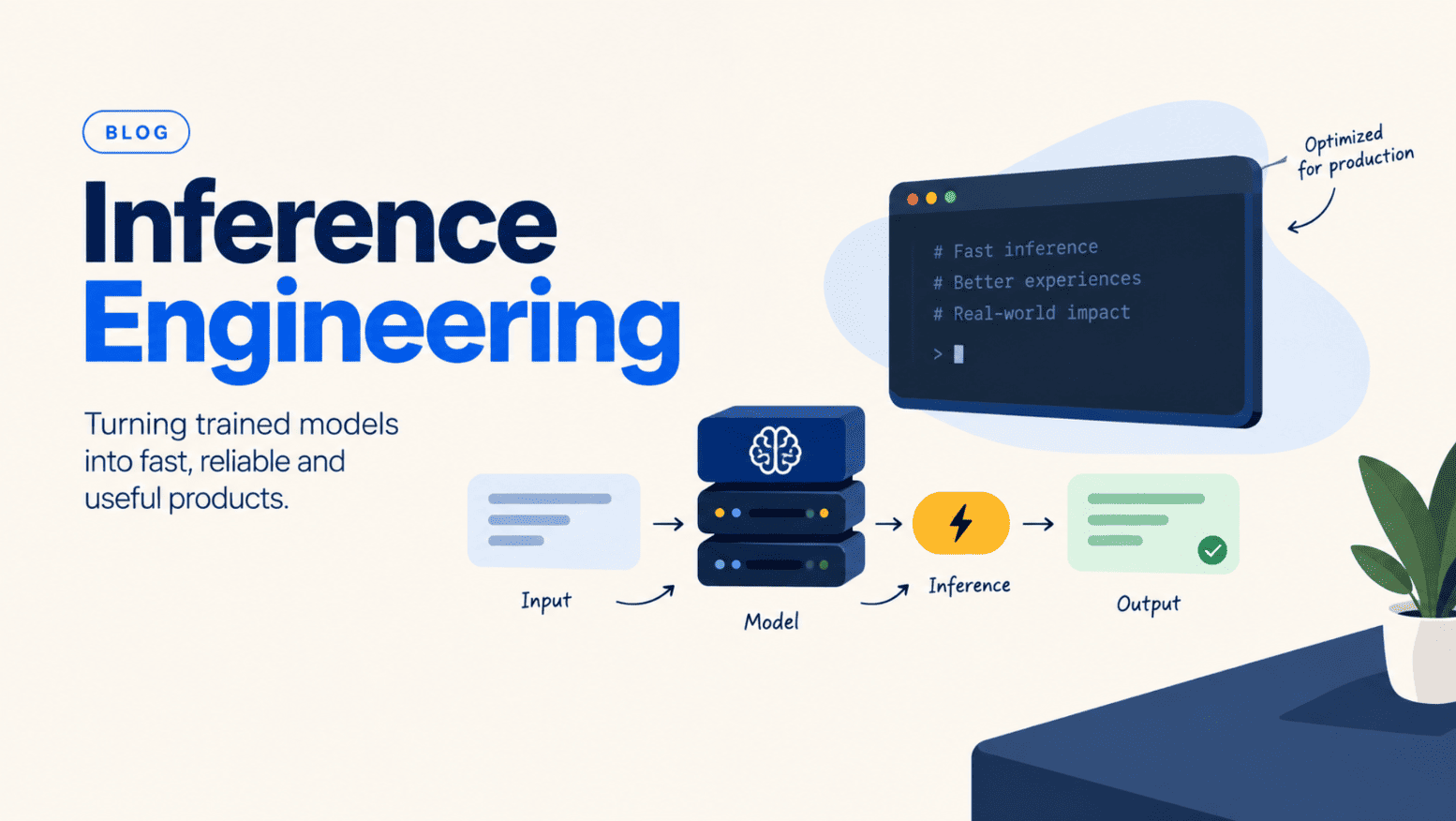
How to Learn Inference Engineering in 2026
If you're an engineer looking at the AI industry and wondering where the compensation and technical leverage sit, the answer isn't "become an ML researcher." Researchers train models. Inference engineers make those models usable in production, and there are 20x fewer of them than the industry needs.